This weeks challenge.
Favorite quotes from books.
Plain Speaking by Harry Truman: Behind every successful man is a good woman and a surprised mother-in-law.
Mark Twain Tonight by Hal Holbrook: I think the devil is much reviled. You have to say something good about someone who can control three fourths of the world's population and all of the politicians.
De Provedencia: Lucius Annaeus Seneca: It is not the man has too little that is poor, but the man who hankers after more. You ask what is the proper limit of a person's wealth? First what is essential, and second, having what is enough.
Cross of Gold Speech by William Jennings Bryan 1896: There are two ideas of government. There are those who believe that if you legislate to make the well-to-do prosperous, their prosperity will leak through on those below. The Democratic idea, however, has been that if you legislate to make the masses prosperous, there prosperity will find its way up through every class that rests upon them.
Dynamics of Faith by Paul Tillich: One cannot be strong without love. For love is not an irrelevant emotion; it is the blood of life.
Kurt Vonnegut's Law: multiple sources. 90% of everything is crap.
The Princess Bride by William Goldman:
Life is pain, anyone who tells you otherwise is selling something.
Learn to live with disappointment.
As you wish.
National Love Proverbs :
German: Love knows hidden paths.
Spanish: He who finds not love, finds nothing.
Scottish: A pennyweight o' love is worth a pound o' law.
English: Love will find a way.
American: Love makes the world go round.
About Me

- P M Prescott
- Family and Friends is my everyday journal. Captain's Log is where I pontificate on religion and politics.
Wednesday, July 24, 2019

Saturday, July 20, 2019
I missed the moon landing.
I was fifteen that day. I lied about my age to get a job at Taco Bell in June of '69. I worked there for three weeks in the night shift as I was going to driving school. It paid 75 cents an hour, but all you could eat for free. They lost on the deal. There was a Dairy Queen next to us and we'd swap food for banana splits and parfaits (they had them back then.) Everything on the menu was a quarter. What I loved they don't have now. It was called a bell beefer. Ground hamburger with red chile and shredded cheese. They were good. The problem was we were only allowed 30 minutes to clean up after closing and the lady I worked with did nothing be piddle around and smoke. I had to clock out and it took another hour to get everything done. My mom meanwhile was waiting out in the car for me until 1am. She said there were times she would have paid me the 75 cents an hour not to work. Believe or not I got fired. Talk about a blessing.
I got another job in a few days at Ham's A&W root beer drive-in. It was kind of the Sonic of that day. I was paid $1.15/hour and it was within walking distance of home. We could have all the root beer or soft drinks for free everything else was charged to our paychecks. After a week of drinking root beer I noticed that the skin around my Adam's apple was tight. When I mentioned it at work they all said they stopped drinking the root beer too for that reason and switched to water. I still love A&W root beer, but now it's diet.
I was working there the day of the moon landing and learned about it the next day when I got up.
I worked the drinks and took the orders off the intercom. There were two car hops, a guy with me at the drink station and cooks behind us. It took about ten minutes after we closed to clean up, but the coolers where we kept the glass mugs had a stainless steel top and the counters were stainless steal. The last thing we did was wipe them down with pure ammonia. Talk about leaving with a buzz.
When I took the order I also had to add up the amount owed. If I added up wrong and it was more than ordered the car hop would catch it from the customer, have to bring it back with to get the right amount and then go back to collect. They also didn't get a tip. On a busy night this stacked things up and I caught hell. If I was short it came out of my paycheck. I quickly learned to double and triple check my figures.
Once Mom, my brother and sister came. I could see them from the window at the order station. One of the items we were out of so I said, "Mom, we don't have that today."
The other guy at the soda station came unglued. "You don't talk to customers that way!"
I said, "That's my mother."
One of the car hops was waiting for an order, she'd just graduated high school. She said, "That's really your mother?"
I said, "Yes."
"Good," she said. "I want to take it out. I'm going to tell her she's going to be a grandmother."
I learned that summer, the one before I started high school as a sophomore. They had Junior highs back then. That the last place I ever wanted to work again was in food. My next job was working at a Skaggs Drug store.
I got another job in a few days at Ham's A&W root beer drive-in. It was kind of the Sonic of that day. I was paid $1.15/hour and it was within walking distance of home. We could have all the root beer or soft drinks for free everything else was charged to our paychecks. After a week of drinking root beer I noticed that the skin around my Adam's apple was tight. When I mentioned it at work they all said they stopped drinking the root beer too for that reason and switched to water. I still love A&W root beer, but now it's diet.
I was working there the day of the moon landing and learned about it the next day when I got up.
I worked the drinks and took the orders off the intercom. There were two car hops, a guy with me at the drink station and cooks behind us. It took about ten minutes after we closed to clean up, but the coolers where we kept the glass mugs had a stainless steel top and the counters were stainless steal. The last thing we did was wipe them down with pure ammonia. Talk about leaving with a buzz.
When I took the order I also had to add up the amount owed. If I added up wrong and it was more than ordered the car hop would catch it from the customer, have to bring it back with to get the right amount and then go back to collect. They also didn't get a tip. On a busy night this stacked things up and I caught hell. If I was short it came out of my paycheck. I quickly learned to double and triple check my figures.
Once Mom, my brother and sister came. I could see them from the window at the order station. One of the items we were out of so I said, "Mom, we don't have that today."
The other guy at the soda station came unglued. "You don't talk to customers that way!"
I said, "That's my mother."
One of the car hops was waiting for an order, she'd just graduated high school. She said, "That's really your mother?"
I said, "Yes."
"Good," she said. "I want to take it out. I'm going to tell her she's going to be a grandmother."
I learned that summer, the one before I started high school as a sophomore. They had Junior highs back then. That the last place I ever wanted to work again was in food. My next job was working at a Skaggs Drug store.
Wednesday, July 17, 2019
Fictional Worlds I'd like to visit.
Wednesday challenge for today is which fictional world I'd like to visit or live.
I've already mentioned my desire to have a fire lizard so Pern would be a natural.
I'd love to live in the Shire of Middle Earth, not too sure about the rest of it.
The flying cars and McDonald's of Fifth Element, not too sure about being a taxi driver there, though.
Here's some worlds by Tony Roberts I'd love to visit:
Kastania: A ruling family trying to restore a crumbling empire back to glory while beset with enemies from without and within.


I've already mentioned my desire to have a fire lizard so Pern would be a natural.
I'd love to live in the Shire of Middle Earth, not too sure about the rest of it.
The flying cars and McDonald's of Fifth Element, not too sure about being a taxi driver there, though.
Here's some worlds by Tony Roberts I'd love to visit:
Kastania: A ruling family trying to restore a crumbling empire back to glory while beset with enemies from without and within.

His Dark Elf series:
A dark elf princess trying to find her kind after being raised by humans.

Tuesday, July 16, 2019
Favorite Authors List
I read lots of books and always have. There was a time I focused on an author and read everything of his or her that I could find in a book exchange. It's still there, you take in a sack full of books and for less than a dollar you walk out with a hand full. As a teacher with two small kids that's all I could afford at the time. Here are some of the authors I gorged myself on.
Isaac Asimov: I don't think it's possible to read everything he wrote. I grew up on his science fiction, branched out into his history books, anthologies then his science books, read his magazine. Perhaps the greatest author of all time.
James A. Michener: I hit a brick wall with him. I read and read and read, book after book and barely made a dint in what was still out there to read. The books are so long and time consuming I gave up. When I was teaching World History I hit ever used book store I could find and picked up around fifty copies of the book and used it as a text book with a short story over most of the time periods covered.
Harrold Robbins: He was my guilty pleasure. 1950'-60s porn in accompaniment to Playboy. My wife is a huge Elvis fan and when his movies came out on VHS she had to buy them. I was surprised when watching King Creole, considered Elvis's best movie. It was Robbins A Stone For Danny Fisher. It was after reading everything he'd written up to that time I thought I could tackle Michener.
Harlan Ellison: I was going through a divorce and the life I envisioned evaporated. I was depressed. There was a book store across from a park I took my dog to run around and went in. It was a childrens and science fiction store. A wonderful lady, now deceased, recommended Death Bird Stories. It is a collection of the most depressing stories you'll ever find. His words expressed what I was feeling and the weight of my despair lifted. I was hooked on him for life. I have a shelf full of his books and treasure them.
Isaac Asimov: I don't think it's possible to read everything he wrote. I grew up on his science fiction, branched out into his history books, anthologies then his science books, read his magazine. Perhaps the greatest author of all time.
James A. Michener: I hit a brick wall with him. I read and read and read, book after book and barely made a dint in what was still out there to read. The books are so long and time consuming I gave up. When I was teaching World History I hit ever used book store I could find and picked up around fifty copies of the book and used it as a text book with a short story over most of the time periods covered.
Harrold Robbins: He was my guilty pleasure. 1950'-60s porn in accompaniment to Playboy. My wife is a huge Elvis fan and when his movies came out on VHS she had to buy them. I was surprised when watching King Creole, considered Elvis's best movie. It was Robbins A Stone For Danny Fisher. It was after reading everything he'd written up to that time I thought I could tackle Michener.
Harlan Ellison: I was going through a divorce and the life I envisioned evaporated. I was depressed. There was a book store across from a park I took my dog to run around and went in. It was a childrens and science fiction store. A wonderful lady, now deceased, recommended Death Bird Stories. It is a collection of the most depressing stories you'll ever find. His words expressed what I was feeling and the weight of my despair lifted. I was hooked on him for life. I have a shelf full of his books and treasure them.
Wednesday, July 10, 2019
Favorite non-fiction books
I am immensely enjoying Lydia Schoch's blog especially the Wednesday challenges. It makes me think about a number of things I've read, gives me the opportunity to write about them and learn about other authors and books to read in the future.
This weeks is my favorite non-fiction books.
Future Shock and Third Wave by Alvin Toffler. In the movie 9 to 5, most of the changes to the work places implemented come from the Third Wave.
Death of a President by William Manchester. I was ten when Kennedy was assassinated. I started reading this book on the tenth anniversary. It had a profound impact on me.
Strategy by H. D. Liddell-Hart
The Art of War by Sun Tzu
The Face of Battle, The First World War, A History of Warfare, Fields of Battle by John Keegan
I taught history for 27 years. World History fascinates me the most.
A number of plays, books and movies have come from this 4 box set:
The Conquering Family, The Magnificent Century, The Three Edwards and the Last of the Plantagenets by Thomas B. Costain
History books by Isaac Asimov: These are the most detailed, yet easy to read history books you'll ever find. Alas they were sold to libraries and not the general public and are scarce as hens teeth today.
The Greeks a Glorious Adventure, The Roman Republic, The Roman Empire, The Egyptians, The Near East, The Dark Ages, The Shaping of France, The Shaping of England
Biographies:
Elizabeth The Great by Elizabeth Jenkins
The Autobiography of Malcolm X by Malcolm X and Alex Haley
In theology: Eschatology or the study of end times.
I am not looking forward to the Rapture and don't believe in a literal thousand year reign of Christ on this Earth. I was before I read the following books.
Worthy is the Lamb by Ray Summers. This book has two parts. The first explains apocalyptic literature from books like Daniel, Ezekiel in the Bible and apocryphal books like Enoch. The second part is a detailed interpretation of Revelation. This book lays out the amillennial interpretation of eschatology. It's basis is that Revelation was written to people living two thousand years in the past and had to mean something to them. To interpret it properly you have to understand the context in which it was written
Victorious Eschatology by Harold R. Eberle and Martin Trench. These writers don't refer to their interpretation as Amillenial, but as Preterist and Partial Preterist, but they're pretty close.
This weeks is my favorite non-fiction books.
Future Shock and Third Wave by Alvin Toffler. In the movie 9 to 5, most of the changes to the work places implemented come from the Third Wave.
Death of a President by William Manchester. I was ten when Kennedy was assassinated. I started reading this book on the tenth anniversary. It had a profound impact on me.
Strategy by H. D. Liddell-Hart
The Art of War by Sun Tzu
The Face of Battle, The First World War, A History of Warfare, Fields of Battle by John Keegan
I taught history for 27 years. World History fascinates me the most.
A number of plays, books and movies have come from this 4 box set:
The Conquering Family, The Magnificent Century, The Three Edwards and the Last of the Plantagenets by Thomas B. Costain
History books by Isaac Asimov: These are the most detailed, yet easy to read history books you'll ever find. Alas they were sold to libraries and not the general public and are scarce as hens teeth today.
The Greeks a Glorious Adventure, The Roman Republic, The Roman Empire, The Egyptians, The Near East, The Dark Ages, The Shaping of France, The Shaping of England
Biographies:
Elizabeth The Great by Elizabeth Jenkins
The Autobiography of Malcolm X by Malcolm X and Alex Haley
In theology: Eschatology or the study of end times.
I am not looking forward to the Rapture and don't believe in a literal thousand year reign of Christ on this Earth. I was before I read the following books.
Worthy is the Lamb by Ray Summers. This book has two parts. The first explains apocalyptic literature from books like Daniel, Ezekiel in the Bible and apocryphal books like Enoch. The second part is a detailed interpretation of Revelation. This book lays out the amillennial interpretation of eschatology. It's basis is that Revelation was written to people living two thousand years in the past and had to mean something to them. To interpret it properly you have to understand the context in which it was written
Victorious Eschatology by Harold R. Eberle and Martin Trench. These writers don't refer to their interpretation as Amillenial, but as Preterist and Partial Preterist, but they're pretty close.
Saturday, July 06, 2019
Books to movies
Today's challenge by Lydia is: What books would you like to see turned into a movie or series.
1. The Dragon Riders series of books by Anne McCaffery. There are books with dragons and books about the harpers who have fire lizards as pets.
2. The Casca the Eternal Mercenary series of books, now at 49 and counting. TV series on History Channel or Sci Fi could do a book every three of four episodes.
3. The First Man in Rome series, by Colleen McCullagh. The history channel, or BBC could do a cheap daily soap opera like I Claudius. The series runs from the rise of Marius to the ascension of Octavian after the deaths of Anthony and Cleopatra. This could run for decades.
4. The Source by James Michener. It's a series of short stories held together by the discovery of artifacts by archaeologists. Each short story could be an episode that would cover two or three seasons on the Networks or four to five on the shorter series of cable channels.
1. The Dragon Riders series of books by Anne McCaffery. There are books with dragons and books about the harpers who have fire lizards as pets.
2. The Casca the Eternal Mercenary series of books, now at 49 and counting. TV series on History Channel or Sci Fi could do a book every three of four episodes.
3. The First Man in Rome series, by Colleen McCullagh. The history channel, or BBC could do a cheap daily soap opera like I Claudius. The series runs from the rise of Marius to the ascension of Octavian after the deaths of Anthony and Cleopatra. This could run for decades.
4. The Source by James Michener. It's a series of short stories held together by the discovery of artifacts by archaeologists. Each short story could be an episode that would cover two or three seasons on the Networks or four to five on the shorter series of cable channels.
Friday, June 28, 2019
Dennis Carstens

Mark Kadella the attorney/protagonist is a struggling one shingle lawyer. His main point is that most attorney's have a hard time paying the rent, employee salaries, and the cost of covering the costs of providing a service to clients when some of them don't pay. The setting for these books is Minneapolis/Saint Paul.

I have an affinity with the first few of these books. After retiring from teaching I worked for general council attorney. He handles civil cases, divorces, writes wills, and on a rare occasion criminal defense. I know how much he struggles to keep his practice profitable. Some months and years are good and some the well runs dry.
The first book Carstens mentions an IRS case that he includes, but it was a personal one and real. The rest are fiction. This case is fascinating reading.
Mark Kadella in the rest of the books has defendants running the gamut from serial killers to a cop tried for murder shooting a suspect, a judge accused of murdering his wife, to a soldier charged with treason. Some of the cases he wins and some he loses. This is not a Perry Mason type of legal mystery series of stories. Each book has a wicked twist at the climax.

The bad guys include a Russian mob boss, The President of the USA and first lady, naturally a journalist who withholds evidence, a drug kingpin a couple are his clients.
The cast of characters include an retired police detective now a PI, a gorgeous PI who used to be a cop until she posed for Playboy, a judge Kadella is a friend with benefits, a beautiful TV reporter that becomes a friend that he gives exclusives. Then there is the wealthiest woman in Minnesota and after Kadella defends the man set up for killing her son and reveals the real killer, then becomes a source of money for other cases. Lastly there is a sociopathic hit man that is used a number of times by the bad guys.
All of the stories are easy to read, there are running lawyer jokes throughout and good natured kidding and flirtation. Sometimes things turn serious. In one story Kadella is run down and nearly killed. the female PI is attacked in her apartment, but she picks the guy up and throws him out of three story window, she also gets shot, but survives.

One of the stories really bothered me at the beginning. A single teenage mother does something really stupid. She is arrested and tried for killing her child. She didn't. The media crucifies her. When I got through the opening and got to the media feeding frenzy it became a really good story.
My biggest problem with most of the stories is the sugar momma paying the bills. I'm sure most attorneys would love to have someone like that, but it don't happen in real life. As Carstens constantly reminds his readers that the average attorney barely makes a living this becomes too convenient. I liked the earlier books where he is worried about if the check will clear. Maybe Carstens thought that would get tedious and adds the sugar momma to keep the story flowing.
Thursday, May 30, 2019
What I learned
Today's question from Lydia Schoch: Lessons I learned from a book character.
 The book is Friendly Persuasion by Jessamine West. William Wyler made it into about the best movie ever made. I posted a review of the movie here.
I learned a lot from a number of characters in the story.
1. The entire Birdwell family taught me that those of deep faith are human and fail to uphold their beliefs. They realize their failing, feel shame, guilt, forgive each other and then go on learning from their mistake.
Acceptance of what is to come. When told that Rebel raiders are coming Eliza says, "If they come they come, like fire or flood."
2. Jess Birdwell taught me that self doubt is vital in understanding the future. He taught me to accept all those around me, even those who condemn or judge unfairly.
3. Eliza Birdwell taught me that there comes a time when force or violence in necessary if there is no other option. When her pet goose is threatened and there was no way to keep a man from ringing it's neck she picks up broom and clobbers him over the head to stop him. Violence should be only a last resort and then to get the other person's attention.
4. Friend Purdy made me realize that of all the characters in the story he is the one most like me, to my shame. He's self-righteous, judgmental, a braggart, and hypocrite. A character named Sam Jordan summed it up when he says to him: "Whatever's right for Purdy and to be right for everyone else." I have the tendency to think those who agree with me are right and those who don't are stupid.
 The book is Friendly Persuasion by Jessamine West. William Wyler made it into about the best movie ever made. I posted a review of the movie here.
I learned a lot from a number of characters in the story.
1. The entire Birdwell family taught me that those of deep faith are human and fail to uphold their beliefs. They realize their failing, feel shame, guilt, forgive each other and then go on learning from their mistake.
Acceptance of what is to come. When told that Rebel raiders are coming Eliza says, "If they come they come, like fire or flood."
2. Jess Birdwell taught me that self doubt is vital in understanding the future. He taught me to accept all those around me, even those who condemn or judge unfairly.
3. Eliza Birdwell taught me that there comes a time when force or violence in necessary if there is no other option. When her pet goose is threatened and there was no way to keep a man from ringing it's neck she picks up broom and clobbers him over the head to stop him. Violence should be only a last resort and then to get the other person's attention.
4. Friend Purdy made me realize that of all the characters in the story he is the one most like me, to my shame. He's self-righteous, judgmental, a braggart, and hypocrite. A character named Sam Jordan summed it up when he says to him: "Whatever's right for Purdy and to be right for everyone else." I have the tendency to think those who agree with me are right and those who don't are stupid.
Thursday, May 23, 2019
Books I liked that became movies or tv shows.
Lydia Schoch has a Wednesday challenge on her blog. I've only recently begun blogging with her becoming acquainted with from Berthold Gambrel.
The Wednesday challenge this week is which books we loved have been turned into movies or TV Series. Here goes:
The Far Pavilions by M.M. Kaye.
Great book. I've read the poor paper back book I got at a book exchange store in town more times than I can count. Recently bought the e-book as my eyesight works better today when I can control the font size.

I told the story to my 8th grade literature class (I did not read stories. At that age you can't take your eyes off the students for a second or things start flying.) In my novel Human Sacrifices, Jan, my protagonist reads this story to her students too, and catches hell from the parents and administrators.
It was made into a min-series. I didn't watch it when it came out and rented the video. The first half of the book on video was done only in flash backs so I don't know if on the original series they did the story of Ash as a child growing up as a playmate for the crown prince. The video only covered the second half of the book as Ashton Pelham-Martin comes back to India from England. They messed it up terribly. Ben Cross and Amy Irving play Ash and Anjuli, which wasn't a problem, but they got the story out of order. Ash goes off to Afghanistan and fights surviving the massacre of the regiment because he can blend in with the inhabitants, then he escorts Anjuli to be married. Bass Ackwards. It made no sense and put the climax of the story in the beginning instead of the end. Stupid stupid stupid.
I first read the story in the early 80's. When Dumb King George II decided to invade Afghanistan in 2002. I knew from reading this book that it would be the single biggest mistake in American History. I think that the fact we have soldiers stationed there who were in diapers when we invaded the grave yard of empires it's proven my assessment.
The Hobbit by J.R.R. Tolkien.
My 7th grade literature teacher, Mrs. Mohica, read this over a nine week period. The summer between 8th and 9th grade I read the Lord of the Rings.
Peter Jackson did a superlative job with all three books. He stayed as true to the books as a visual medium would allow. He cut out Tom Bombadil, but he can be forgiven for that. One complaint, when Frodo tries to offer the Nazgul the ring at the battle with Faramir before going into Mordor is senseless. Sauron would know where the ring is and attacked to reclaim it. Third book not needed.
The Hobbit started off well. stuck to Jackson the story, but then just had to turn a short book into three movies. Staying with the book would make basically a movie and a half. He could have stretched it to two movies and it would have OK, but the fight with Smog in the mountain where they cover him with molten gold was just plain ridiculous. It made no sense for Smog to go after the men of Lake Town when those trying to steal his treasure were in the mountain. The extended fight scene between Thoren and Ork king was merely gratuitous.
I Robot by Isaac Asimov.
I read I Robot in 9th grade. It's an anthology of short stories giving the evolution of robotics. Asimov created a whole universe based on the 4 laws of robotics in a series of books. None of them resemble the movie with Will Smith. It was an okay movie. They made a movie based on Asimov's masterpiece short story Nightfall, and it was so god awful I turned it off and almost burned the video tape before returning to the Blockbuster.
A Boy and His Dog by Harlan Ellison.
This was a short story about an after the nuclear war apocalypse where dogs and humans were telepathically linked. The movie starring a young Don Johnson stayed fairly true to the story. What was left out of the movie was Ellison's punch line. In the story it ends with the question "Did I find love," The answer is, "Yeah, a boy loves his dog."
Ellison also had a short story entitled: Brillo. It's about the first robotic police officer. Brillo stood for metal fuzz. It's a sixties slang thing. A number of TV shows and movies have been made on this theme. Most notable is the Robo Cop movies. Ellison was pissed off that he wasn't give credit for inventing the genre.
The Wednesday challenge this week is which books we loved have been turned into movies or TV Series. Here goes:
The Far Pavilions by M.M. Kaye.
Great book. I've read the poor paper back book I got at a book exchange store in town more times than I can count. Recently bought the e-book as my eyesight works better today when I can control the font size.

I told the story to my 8th grade literature class (I did not read stories. At that age you can't take your eyes off the students for a second or things start flying.) In my novel Human Sacrifices, Jan, my protagonist reads this story to her students too, and catches hell from the parents and administrators.
It was made into a min-series. I didn't watch it when it came out and rented the video. The first half of the book on video was done only in flash backs so I don't know if on the original series they did the story of Ash as a child growing up as a playmate for the crown prince. The video only covered the second half of the book as Ashton Pelham-Martin comes back to India from England. They messed it up terribly. Ben Cross and Amy Irving play Ash and Anjuli, which wasn't a problem, but they got the story out of order. Ash goes off to Afghanistan and fights surviving the massacre of the regiment because he can blend in with the inhabitants, then he escorts Anjuli to be married. Bass Ackwards. It made no sense and put the climax of the story in the beginning instead of the end. Stupid stupid stupid.
I first read the story in the early 80's. When Dumb King George II decided to invade Afghanistan in 2002. I knew from reading this book that it would be the single biggest mistake in American History. I think that the fact we have soldiers stationed there who were in diapers when we invaded the grave yard of empires it's proven my assessment.
The Hobbit by J.R.R. Tolkien.
My 7th grade literature teacher, Mrs. Mohica, read this over a nine week period. The summer between 8th and 9th grade I read the Lord of the Rings.
Peter Jackson did a superlative job with all three books. He stayed as true to the books as a visual medium would allow. He cut out Tom Bombadil, but he can be forgiven for that. One complaint, when Frodo tries to offer the Nazgul the ring at the battle with Faramir before going into Mordor is senseless. Sauron would know where the ring is and attacked to reclaim it. Third book not needed.
The Hobbit started off well. stuck to Jackson the story, but then just had to turn a short book into three movies. Staying with the book would make basically a movie and a half. He could have stretched it to two movies and it would have OK, but the fight with Smog in the mountain where they cover him with molten gold was just plain ridiculous. It made no sense for Smog to go after the men of Lake Town when those trying to steal his treasure were in the mountain. The extended fight scene between Thoren and Ork king was merely gratuitous.
I Robot by Isaac Asimov.
I read I Robot in 9th grade. It's an anthology of short stories giving the evolution of robotics. Asimov created a whole universe based on the 4 laws of robotics in a series of books. None of them resemble the movie with Will Smith. It was an okay movie. They made a movie based on Asimov's masterpiece short story Nightfall, and it was so god awful I turned it off and almost burned the video tape before returning to the Blockbuster.
A Boy and His Dog by Harlan Ellison.
This was a short story about an after the nuclear war apocalypse where dogs and humans were telepathically linked. The movie starring a young Don Johnson stayed fairly true to the story. What was left out of the movie was Ellison's punch line. In the story it ends with the question "Did I find love," The answer is, "Yeah, a boy loves his dog."
Ellison also had a short story entitled: Brillo. It's about the first robotic police officer. Brillo stood for metal fuzz. It's a sixties slang thing. A number of TV shows and movies have been made on this theme. Most notable is the Robo Cop movies. Ellison was pissed off that he wasn't give credit for inventing the genre.
Wednesday, May 15, 2019
Balloons over my house

My house is downwind from the Albuquerque Balloon Fiesta Park. On clear mornings over the years the various dogs have awakened us barking at one or more of them flying over or near us. The burners make a distinctive noise that seems to set dogs off.

There's an empty mesa behind us and the balloons will either land and exchange passengers or deflate. These are commercial flights and business is good. The gondolas can hold anywhere from five or ten people.

People come from all over the world to see the balloons. I only have to got out my back door and point my camera. I don't do that much anymore as its mostly the same balloons and it gets repetative.


This was the Zebra special shape directly overhead.

Monday, May 06, 2019
Mark Dawson: Author
Kindle Unlimited is great for retired old farts like me with little to do but read. Of course I read prodigiously before I became a retired old fart, but it was with real books not electronic ones. My eyes can't handle the miniscule print of most books today.
That was a preamble for my latest author find. Mark Dawson.
In the past two months I've read 21 of his books.This guy writes like crazy. It is non-stop action from page one to the heart pounding climax at the end. The first 14 are his John Milton series. It's a simple premise. John Milton is Number 1 in Group 15. A governmental hit squad for MI6. He gets burned
 out after killing over a hundred people. The problem is that this isn't a job he can retire from. He knows too much.
What prompted this attack of conscience is his alcoholism. The way he chose to forget all those he killed was by drinking it away. He starts going AA meetings. Something that Group 15 frowns upon as he could divulge state secrets. The most important part of the twelve steps in number 9. Restitution. He can't do much for all those he's killed, but his form of restitution is to help those in need around him. A kind of one man A-Team. In the first book he tries to help a single mother and her teenage son living in a project dominated by a gang. It doesn't turn out well as Group 15 sends out someone to eliminate him and innocents get caught in the crossfire.
The first few books have him being chased by Group 15 until he fights back and eliminated the paranoid head of the agency known as Control.
 This leads me to the next seven books. A former Number 1, Beatrix Rose went into hiding from Control when Milton just joined the team. Control Killed her husband and kidnapped her daughter. She hid and didn't seek retribution for the safety of her child. When Milton decides to go after Control he teams up with her and they get Control to flee and get Group 15 under better management.
Beatrix gets her daughter back, but she's dying of cancer and doesn't have long to teach her how to survive without her.

This leads to a three book set of Rose hunting down the five agents that murdered her husband and kidnapped her daughter. At the same time doing intensive training for her daughter to defend herself from those wanting to use her for revenge. Beatrix is aided in this by the new Control Alexander Pope.
 This is followed by a four book set, so far, on Isabella Rose after her mother dies. Alexander Pope is fired from Group 15 and Group 15 is disbanded. Pope enlists the aid of Isabella to infiltrate a private school to befriend the son of a man he suspects is supplying money to ISIS. And the stories keep coming.
I just found out that there are three Beatrix Rose novels out set during the time while she was hiding out in Hong Kong. Now I've got three more of his books to read. Mouth is drooling in anticipation.
That was a preamble for my latest author find. Mark Dawson.
In the past two months I've read 21 of his books.This guy writes like crazy. It is non-stop action from page one to the heart pounding climax at the end. The first 14 are his John Milton series. It's a simple premise. John Milton is Number 1 in Group 15. A governmental hit squad for MI6. He gets burned
 out after killing over a hundred people. The problem is that this isn't a job he can retire from. He knows too much.
What prompted this attack of conscience is his alcoholism. The way he chose to forget all those he killed was by drinking it away. He starts going AA meetings. Something that Group 15 frowns upon as he could divulge state secrets. The most important part of the twelve steps in number 9. Restitution. He can't do much for all those he's killed, but his form of restitution is to help those in need around him. A kind of one man A-Team. In the first book he tries to help a single mother and her teenage son living in a project dominated by a gang. It doesn't turn out well as Group 15 sends out someone to eliminate him and innocents get caught in the crossfire.
The first few books have him being chased by Group 15 until he fights back and eliminated the paranoid head of the agency known as Control.
 This leads me to the next seven books. A former Number 1, Beatrix Rose went into hiding from Control when Milton just joined the team. Control Killed her husband and kidnapped her daughter. She hid and didn't seek retribution for the safety of her child. When Milton decides to go after Control he teams up with her and they get Control to flee and get Group 15 under better management.
Beatrix gets her daughter back, but she's dying of cancer and doesn't have long to teach her how to survive without her.

This leads to a three book set of Rose hunting down the five agents that murdered her husband and kidnapped her daughter. At the same time doing intensive training for her daughter to defend herself from those wanting to use her for revenge. Beatrix is aided in this by the new Control Alexander Pope.
 This is followed by a four book set, so far, on Isabella Rose after her mother dies. Alexander Pope is fired from Group 15 and Group 15 is disbanded. Pope enlists the aid of Isabella to infiltrate a private school to befriend the son of a man he suspects is supplying money to ISIS. And the stories keep coming.
I just found out that there are three Beatrix Rose novels out set during the time while she was hiding out in Hong Kong. Now I've got three more of his books to read. Mouth is drooling in anticipation.
Thursday, January 24, 2019
Friendly Persuasion
I came across an article that gave five reasons Why Christian Movies Suck. The five reasons are:
 On point five the writer says he's never seen a good movie about Christians. Here I have to disagree. There is a classic, at least it shows regularly on Turner Classic Movies. Friendly Persuasion. I'm going to go into detail before comparing why this is a good Christian movie compared to the ones mentioned above.
- They are propaganda.
- Have an imagined reality ie too perfect.
- Narrative tidiness. The Christians always convince non-believers with their arguments.
- Theology made of platitudes
- Not cool. As propaganda they're out of tune with what makes a good movie.
Jared C. Wilson is spot on with the movies produced by Lifeway, and other Christian groups. I've gone to promotional showings of The Love Challenge, War Room, and a few others. I compare them to Hallmark movies. Sugary feel good movies with bland music and actors who show little emotion other than smug contentment.
On point five the writer says he's never seen a good movie about Christians. Here I have to disagree. There is a classic, at least it shows regularly on Turner Classic Movies. Friendly Persuasion. I'm going to go into detail before comparing why this is a good Christian movie compared to the ones mentioned above.
The movie came out in 1956. It stars Gary Cooper, Dorothy McGuire and a young (pre Psycho) Anthony Perkins.
The setting is 1862 Illinois with the Birdwell family. They're Quakers. Jess and Eliza have three children: Joss a young man, Mattie a teen aged daughter and Little Jess a rambunctious boy. They also have a pet goose named Samantha. It doesn't take long to get into the rhythm of them speaking with thee's and thou's.
The movie starts with Little Jess getting bitten by Samantha while getting water from the outside well. The boy and goose do not get along. Eliza keeps her son from harming the bird and then gets everyone in the family ready for Sunday Meeting.
In their surrey going to the meeting house they meet up with Sam Jordan and his son Gard. Mattie is happy to see Gard as he's home on furlough as an officer in the Union army. Sam and Jess have a race to see who has the fastest horse, which Sam wins and the Birdwells get a face full of dust.
In the meeting house a Union solider enters and tries to get the men to defend their farms. Rebel raiders are on their way and all the men are needed to stop them. He tries to shame them as hiding behind their religion and challenges Josh and another young man named Caleb. When they won't commit, an older man named Purdy declares that "Nothing could induce me to violence. Nothing!"
Jess then say's "I don't know what I would do if my family is threatened." Friend Purdy then says he has doubts about Jess's commitment to the Lord.
In the next scene Gard Jordan rides over to court Mattie. Little Jess wants to know if he killed any Rebs and Eliza says there'll be no talk of fighting and killing. Gard asks if Mattie could go with him to the local Fair. Eliza says that there is too much temptation. She adds that Jess could go to sell Red Rover and get a horse that doesn't want to race. Somehow Jess convinces Eliza for the family to all go.
It's surprising how the fair then is not much different than going to one today. They split up and agree to meet back in an hour. Jess meets up with Sam and they go into a tent where organs are being sold. Quakers don't believe in musical instruments. Josh and Caleb watch a wrestling match, Mattie takes off with Gard and Little Jess ducks out from Mom. He goes to a table of a shell game and points out the winning shell a number of times.
Eliza gets upset when she finds Mattie and Gard dancing. Rounds up Little Jess.
Caleb gets talked into wrestling the pro that taking on the locals. When he hears the man moan he quits. Caleb and Jess are the surrounded by the other spectators and start getting slapped because they won't fight back. Jess steps between the two sides and one of them tries to slap him. He says, "Thee needs cooling down, Friend," then dunks him in a barrel of water. Eliza comes up from behind and says, "Thee having an altercation?"
Eliza gets upset when she finds Mattie and Gard dancing. Rounds up Little Jess.
Caleb gets talked into wrestling the pro that taking on the locals. When he hears the man moan he quits. Caleb and Jess are the surrounded by the other spectators and start getting slapped because they won't fight back. Jess steps between the two sides and one of them tries to slap him. He says, "Thee needs cooling down, Friend," then dunks him in a barrel of water. Eliza comes up from behind and says, "Thee having an altercation?"
Jess is a nursery man and he takes Josh along with him as he visits neighboring farms to sell his stock. He meets a widow and three marriable daughters they take one look at Josh think he's on the menu.
The widow Hudspeth takes Jess out to see her land so he could tell her what crops to plant. They run into a guy who wants to race. The widow tries to slow down Lady. But this horse won't be passed. Jess takes the reins from her and wins the race. They trade horses.
When Jess and Josh get back Eliza is happy that he traded in Red Rover for Lady. "Just what I prayed for, I plain horse that won't fill every man on the pike with notions of racing."
Jess replies, "Lady will discourage racing I assure thee."
As they walk up to the house from the barn the organ merchant from the fair delivers the organ Jess bought.
Eliza when she learns of this stands in the doorway and tell Jess, "I forbid thee to let that musical instrument into the house."
Jess tells her, "Eliza, when thee asks or suggests I'm like putty in thy hands, but when thee forbids thee's barking up the wrong tree."
Eliza then declares she's going to barn as she wont be in the house with it.
Jess then spends the night in the barn with Eliza and in the morning as they're walking up to the house it's agreed the organ will be in the attic and no playing on first day.
Sam Jordan then comes by to see Jess's new horse. He shocked that he would trade Red Rover for what the calls "Crow bait."
On first day Jess and Eliza go to meeting in a buggy as the surrey is mysteriously missing a hub nut. Sam and Jess meet up on the way and Jess leaves Sam with a face full of dust. Usually the race is over well before they get to the Methodist church and the Quaker meeting house, but Sam doesn't give up until the end. Jess is ecstatic, Eliza is not happy and then meet the stares of their fellow worshipers.
Jess asks coming in for lunch, "What does thee see in that shifty eyed bird," referring to Samantha.
Eliza says, "Oh, Jess, she marches along so lordly like."
The Jess tells her, "She marched quite lordly like through six pecks of young strawberries this morning."
When he goes back into the fields he sees smoke. Going back up to the house Gard has come to ask Mattie to marry him and Josh rushes up with news that the rebels are burning all the surrounding farms. Gard encourages them to go into the woods and hide. Jess and Eliza take a strong stance. Jess answers, "This I is our home,."
"If they come, they come like fire of flood." Eliza tells him.
"If they come, they come like fire of flood." Eliza tells him.
Josh tells Gard he'll go with him. He's decided to fight. Gard tells Josh to come by in the morning and to talk it over with his parents.
Jess tells Josh that he'll have to kill. His mother tells him to stay true to his faith. He says he'll pray. In the morning he comes down with one of their hunting rifles. At first Eliza turns her back on him, but as he leaves goes out to hug him.
After Josh leaves Sam and Purdy ride up while Jess is chopping wood. Purdy, the one who said nothing would induce him to violence, tells Jess that the rebels burned his barn and stole every thing he had. Jess offers to help him, but Purdy says, "If thee wants to help pick up a gun."
Jess answers, "I'm not ready to do that."
Purdy says, "War time calls for another kind of thinking."
Sam steps in, "Times have changed but you haven't. Last week you told me Gard was going to hell for fighting, now you tell Jess he has to fight. Whatever's right for Purdy has to be right for everyone else."
Purdy leaves, Jess asks, "They hit they place Sam."
"Naw," he says, "I'm just going to see how the boys are getting along. If there's any fighting to be done I'll do it for both of us." As he mounts up he adds, "I'd like to see someone stand up for finding a different way of settling things."
There's a battle as Gard is commanding the militia. Lady returns to the barn without Josh. Jess gets his rifle and goes out to the horse. Then comes the most meaningful exchange in the movie. Little Jess says, "Kill a Johnny Reb for me."
Jess bends down and tells Little Jess, "Son, never talk about another man's life like that."
After Jess leaves to find Josh. The rebel raiders ride in. Eliza greets them and tells them where to find their chickens and other food. She invites them inside to eat hot food at the table. While Eliza is dishing out food for the men, outside one of the Rebs sees Samantha. He starts chasing the goose around the front of the house. Eliza hears Samantha's squawking and rushes out just as the man is about to ring her neck. She grabs a broom and starts clobbering him about the head. "Samantha's a pet. A pure pet." She yells at him.
The man grabs his hat and stands up saying, "I wish I'd known that sooner."
The men thank Eliza for all the food and ride out.
Eliza is mortified. She is filled with guilt over resorting to violence. Little Jess picks up the broom and says, "What a whacking."
Mattie tells him, "Papa should never know."
While Jess is riding to find Josh he comes across Prince, Sam Jordan's horse. He finds Sam gut shot and he dies in Jess's arms. Jess is then shot, but the bullet only grazes his forehead. While he's playing dead the reb comes up to take Lady. Jess stands up and the guy misses his next shot. Jess takes the gun away while reloading. The man stands waiting for the shot that will kill him. Jess tells him. "Go, I'll not harm thee." The man walks away.
Jess finds Josh. Josh is wounded and holding onto the arm of the man he killed and crying. Jess tells him, "Thee did what thee had to do." then picks him up and takes him home.
The next first day Little Jess is playing the organ which in now in the parlor instead of the attic. As they're starting to leave Jess notices that Samantha is being friendly to Little Jess.
"What's come over that bird?" He asks.
Little Jess then tells him about his mother whacking the Reb. Jess then teases Eliza making her blush with shame again as they leave for first day meeting.
Comparison of Friendly Persuasion to today's Christian movies.
Does this movie have the same flaws as described above of today's Christian movies?
Jess likes to race Sam on the way to meeting and is upset when he loses and happy when he wins. There is temptation all around them. First in the meeting house, when asked to fight and shamed when they refuse. At the fair just about every moral tenet of their beliefs are challenged. When the raiders come they give into violence. Josh decides to fight, Eliza picks up a broom, Jess disarms the Reb. They're human. Eliza came the closest to resisting temptation, but when Samantha's life was threatened there wasn't any way to save her except by hitting the guy with a broom to get his attention.
It's how they deal with their weakness that makes them strong. Josh saw what the rebels were doing and felt he had to do something.
It's how they deal with their weakness that makes them strong. Josh saw what the rebels were doing and felt he had to do something.
Jess had every reason to kill that Reb. He killed his friend and shot at him twice, but once his life was no longer in danger he let him go.
Jess and Eliza had a disagreement over the organ, but found a way to compromise. Josh and Eliza both feel remorse for the violence they resorted to. Nowhere in the movie did they try to convert the others around them. They simply tried to stay as true to their faith as possible.
Naturally in every movie the viewer tends to associate with the hero. Yet when I examine my own faith I find the one character that come closest to me is not Jess. Yes, I would like to think I could let the Reb go, but I would have pulled the trigger. I'm closer to Purdy. There's the natural tendency to think other people should be like me. I'm smart, they're stupid. If a driver is going slower than me he's an idiot, if he's driving faster than me he's a maniac. As George Carlin pointed out. Our streets are full of idiots and maniacs.
The last point made by Wilson is that Christian movies can't be cool. They're made by Christians to reinforce what is supposed to be the perfect Christian.
Friendly Persuasion was a book by Jessimyn West. It was about her family. The move was made by a studio that wanted to make money. As Turner Classic Movie channel pointed out in their history of the movie, the original script didn't have Josh going off to fight. William Wilder felt that made the movie too flat. It needed more conflict, which is the heart of any great story. Josh leaving to fight, the family confrontation before he leaves, and then the acceptance and forgiveness afterward is what in my opinion makes the movie cool.
Sunday, December 30, 2018
House of Seven Gables
I've already posted that I don't like horror movies or reading them. I've never been interested in reading a Steven King book, but I did like his forward for a Harlan Ellison anthology. I do like Edgar Allan Poe.
From 7th grade on I read Poe. The Pit and the Pendulum, Cask of Amontillado, Tell Tale Heart. In college for American literature the Dread Professor Jamar assigned all students a topic for the semester term paper. I was given: Explore the Gothicism in the writings of Edgar Allan Poe.
I felt I lucked out. I'd read most of Poe's stories and his poems and brushing up on them would be easy. The only story I hadn't read was The House of Seven Gables. I naturally procrastinated about writing the term paper until it was a week before it was due. It was between Cross Country and Track seasons so I had a weekend without a road trip. My roommate went home and like a fool I waited until 11pm to start reading the one story I had never read. It took me thirty minutes to read. Then I got up, got dressed and went to the SUB not venturing back to the my dorm room until dawn. BTW I got an B on the term paper. That was as good as an A in any other class. She was the only teacher in college that made us do graduate level work. She would have been my easiest teacher at Seminary.
From 7th grade on I read Poe. The Pit and the Pendulum, Cask of Amontillado, Tell Tale Heart. In college for American literature the Dread Professor Jamar assigned all students a topic for the semester term paper. I was given: Explore the Gothicism in the writings of Edgar Allan Poe.
I felt I lucked out. I'd read most of Poe's stories and his poems and brushing up on them would be easy. The only story I hadn't read was The House of Seven Gables. I naturally procrastinated about writing the term paper until it was a week before it was due. It was between Cross Country and Track seasons so I had a weekend without a road trip. My roommate went home and like a fool I waited until 11pm to start reading the one story I had never read. It took me thirty minutes to read. Then I got up, got dressed and went to the SUB not venturing back to the my dorm room until dawn. BTW I got an B on the term paper. That was as good as an A in any other class. She was the only teacher in college that made us do graduate level work. She would have been my easiest teacher at Seminary.
Friday, December 28, 2018
Bad science makes bad law

--Supreme Court Justice Oliver Wendell Holmes in the majority opinion of Buck v. Bell. May 2, 1927
Paula Paul has written a horror story, only this one actually took place in 1926. The Mind of a Deviant Woman is about Carrie Buck who under a newly crafted law was forcibly sterilized for being feebleminded. The novel is based on a real woman, but Ms. Paul has created a living breathing human being by fictional means. Carrie Buck is given to a family and adopted, but treated as a servant. It might have been a hard luck story set in a hard time for everyone who lived in such a time as much of the book is devoted to Carrie growing up from her point of view.
The science of the day considers those less fortunate to deviate from the norms of society. (Using the terminology of the day) Through heredity they believe criminals, prostitutes, epileptics, and morons perpetuated themselves through reproduction. Many conclude that the sensible answer is sterilization.
Louisa Van Patten wrote a scholarly article that was published in a scientific journal while working on her masters. It was entitled The Mind of a Deviant Woman. While researching to expand her research she becomes involved with the case of Carrie Buck, whose mother produced three children and was unable to properly take care of them. Her mother was sent to The Colony, an institution for epileptics, feebleminded and morons. Carrie became pregnant and the Dobbs family felt this shamed their family and had her declared feebleminded. Then the all too true horror begins.
I commend Paula Paul for writing such a compelling story and making the reader feel the pain of a scared little girl who was so horribly treated by all those around her.
Wednesday, November 28, 2018


Friday, November 02, 2018
Daughters of the West Mesa

Her next work took her some time and an enormous amount of research. I need to explain. In 1990 on the west side of Albuquerque a number of young women and one fetus were found murdered and buried. The murderer has never been found or punished. There was a major excavation to uncover all of the bodies. They were all prostitutes only one wasn't Hispanic and she was Native American.
Irene decided to write a book in their memory and the affect this had on their families particularly the Hispanic community. The book is named: Daughters of the West Mesa.
I looked forward to reading the book for the number of years it took for her to write it. Here is my review.
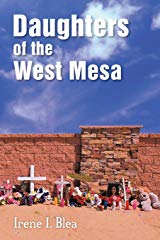
An Hispanic woman is startled to hear on the news of bones being found on the West Mesa by someone walking their dog. What's worse is that the city starts excavating the unclaimed mesa behind her house. Those murdered are separated from her by only a wall. As more bodies are discovered they are all female, in their twenties, Hispanic and known prostitutes.
Dora worries that one of those bodies yet to be identified might be her estranged daughter. As each evening newscast conveys new evidence Dora spends her days dreading a phone call making the unthinkable reality.
She starts going over her failed marriage and after finding a well paying job the decision to move away from the South Valley where her family has lived for generations. Her large extended family feel she's betrayed them and they become estranged.
Starting to second guess her decision to move out of an impoverished part of town to a nice house in a middle class neighborhood, was the cost to her daughter of growing up without cousins, aunts, uncles and grandparents worth going to better schools?
She relives her daughters rebellious teen age years and trying to fight the peer pressure of radical music, drugs and sex. Wanting her to go to college and career, her daughter joins a rock band and they loose touch. Whenever they meet she was shocked at her looks and need for money. The final time Dora refused to enable her financially. With the news of each new woman's skeletons being found her fear deepens as no matter how hard she tries there is no way of contacting her daughter to assuage her fears.
This was an extremely difficult read, and I'm sure even harder for Irene to write. At Treasure House Books in Old Town in Albuquerque, Irene's book signings have been wall to wall. She's grown a special bond with the family members of the real women found and still mourned. Irene merits all the acclaim that has accompanied this novel.
For an Anglo man it was enlightening to learn of Hispanic family culture and relationships. It was an insight into the female mind not usually explored in at least the fiction I read.
Okay, here's my problem. I know it's a man problem, but so much of the book was constant guilt, remorse, recrimination, second guessing every decision Dora made in over thirty years. By the time I finished the book I was ready to scream: "Enough with all the angst!"

From a man's perspective it was overkill, but Irene didn't write this book for men. She wrote it for the mothers of those who lost loved ones, and I'm sure they suffer the guilt, remorse, recrimination, and second guessing for every decision they made.
Tuesday, August 21, 2018
Oblivion

Oblivion: A Novel Place to Live by Hank Bruce is a refreshingly wonderful book.
It's part mystical, fantasy, historical, whimsical, and a hard book to put down and at the end you want the story to go on forever. It is a novel place to live, in that it's a different and unique town that also happens to be in a novel.
Oblivion is a ghost town in New Mexico. Belinda is a burned out advertising executive that leaves the office, buys clothes from thrift store, gets on a bicycle and rides away. On a whim when she sees an old faded wooden sign that says Oblivion decides to check it out. She meets Ben, who's an artist that lives a few miles away. They enjoy each other's company, spend the night together platonically and go their separate ways. Then the story gets interesting.
Ben has some friends who he tells about Belinda, they decide the only way he can get her back is to buy Oblivion, which just happens to be for sale. They grab some of his paintings and at an open air market make nearly two thousand dollars. He wins the bid and now owns a ghost town.
Belinda meets a woman who has mystical powers. The woman convinces her to come back to Oblivion and when a biker gang starts to harass them suddenly there's a thunder storm that drives the bad guys away and they go on.
The homeless in Santa Fe flock to the town, start cleaning it up and fixing up houses for their families. Scientists from the University of New Mexico decide to make a social experiment of the town and built wind turbines and solar panels for electricity. They built solar toilets that bake human waste into bricks that they can then use for fuel.
Naturally there's the rancher who was outbid for the town and offers thousands more for it, which is refused. He needs the town because it has the underground water he's been using for his ranch.
Meanwhile Belinda becomes a poet, Ben is not equipped to run a town. He just wants to paint.
An old Indian comes and takes over the spiritual side of things telling everyone that this is a town built around love. When the rancher tries to have his road crew block of the only road leading into the town, which is land he owns. The mystic woman sends a swarm of bees to drive them away.
A lot goes on in this book. It's not all peace and harmony in the town without proper structure. The rancher sees to it that government agencies snoop around and want to shut the town down for not complying with rules and regulations.
The plot is intriguing in and of itself, but Hank's prose and poetry is what really makes the book memorable. I'm reminded of Bridges of Madison County. The way the book was worded is what made the book.
This is definitely a book everyone should enjoy.
Monday, August 13, 2018
Batann Memorial Park
Bataan Memorial Park
I
was waiting for a Walgreens pharmacy to open in order to get a prescription for
my mother, yesterday. Across the street is Bataan Memorial Park in Albuquerque, New
Mexico. Every year on Memorial Day there is a gathering of those few still
alive who were in the Bataan Death March at the park. There are honor guards
from different branches of the military present, speakers and the playing of
taps.
This
day there was a church gathering for an open-air meeting. A few guys were
setting up boundaries for a game of flag football. A few people were walking
their dogs around the edges. On the south side next to a circular wall a
homeless man was sleeping on flattened boxes.
I
ate a couple of Egg McMuffins, giving the last bite of each of them to my Jack
Russell mix dog, named Sammie. The table where I was eating used to have a WWII
five-inch gun, the barrel properly capped. Kids used to climb over it and use
it like a jungle gym. I noticed a partial amphitheater on the south side that
was facing north. To the side of the circle of benches were pillars of granite.
It’s been there awhile, but not when I lived by the park.
I
tossed the trash and walked Sammie to look at the pillars of granite. They
listed the names of those from New Mexico who fought on Corregidor, the Bataan Peninsula
and died during the infamous death march. The first column listed the names of
officers. Then each column listed those who were from different cities in New Mexico:
Clovis, Gallup, Santa Fe, and Albuquerque.
I looked
at each granite pillar, about eight feet high and the names etched on both
sides. I found the names ending in S and checked them. I passed a number of columns
until I found the name I sought. Spensely.
I never knew him. It was the first time I knew
his whole name. Tears filled my eyes as I was transported back to when we bought
the house a few blocks away from the park in 1971.
It’s complicated
My
father was finishing up his teaching degree at the University of New Mexico (UNM).
My mother was a secretary in an insurance company. A fellow female student sat
next to my father, and he was always a rather outgoing type of guy. Nancy Spensely
was a former high school cheerleader and never met a stranger. She confided in
Dad that she needed a job after she graduated as she was getting married. He
knew Mom’s office was needing a receptionist. He told her to apply. She got the
job.
Mom
and Nancy got along well and gave her advice on planning the wedding. Mom
mentioned that we needed a bigger house. Nancy mentioned after the wedding her grandmother would be left alone in a huge house and couldn’t take care of it.
We
looked into buying the house from her, but at the time couldn’t afford it. For
two years Mrs. Spensely waited until my father finished his student teaching
and started teaching third grade. In the Spring of 1971 we moved into a three-bedroom,
one bath, with a converted coal room as a basement house. It also sat on a quarter
acre lot surrounded by huge Elm trees.
The
house and neighborhood were built in 1926. My mother’s boss told her we didn’t
buy a house we bought a project. While living there they reroofed, rewired, replumbed, replaced the gas heater, put in solar panels and a swamp cooler. They needed to cut down a few of the elm trees.
When
moving into my bedroom, the first time to have a room without my brother, in
the closet I got up on a stool to clean the shelf above the clothes bar. It was
rather dusty. I came across some papers that were underneath the dust. Pulling
them out I noticed there was an envelope and outside of it a telegram. I read
the words, “The United States Army regrets to inform you…” the last name was
Spensely.
I
took it to my mother and asked what to do with it. It wasn’t like junk mail
that got left behind. She told me where Mrs. Spensely was living, which wasn’t
too far and to take it to her.
The
kind lady waited two years for us to be able to buy the house from her and we
thought the world of her. I didn’t want to bring up an old wound. It was thirty
years since she received it. Would she want to see it again?
Putting
the telegram into the envelope, I drove to her new house, nocked on the door.
She opened it and I gave the envelope to her. She thanked me and I left. I never
had contact with her again.
Memories of the Park
Back
in that day, the park was just grass up to the curbs with a dirt track worn by
joggers and the Duke City Dashers (girls track team before Title IX) who trained
there. There was a flag and some flowers around it on the south side which was
next to Lomas Blvd. with a plague giving the name. On the eastern side was a five-inch
gun like the ones used by the battery division that was mostly made up of
soldiers from New Mexico and Arizona stationed in the Philippines before Pearl
Harbor. It was mostly a forgotten park.
I
used to take Harvey, our German Shepherd/Collie mix and run around the park in
the evenings and Saturdays. On Sundays before leaving for college I’d meet up
with a bunch of other guys and played touch football. The summer I left for
college I joined a pick-up game of football. A 440 runner from a rival high
school lived across from the park. I was on his teem and he was the QB. I went
out long and he threw it at me. I thought I was at the end of his range and
waited for the ball to come down. It sailed over my head by ten feet and just
kept on going. That’s when I remembered he was also the school’s quarterback.
He never threw it my way again.
Across
a side street on the east of the park was Russel’s bakery, where Dad would go
every Saturday for donuts and coffee. Gil’s Runners World sat on the corner of
Carlisle and Lomas across from the bakery,,Hallmark shop and ceramic shop that extended
west from the bakery. My mother and sister would make ceramic pieces, fire them
and bring them home.
Around the corner was a small space that
looked directly across the park. A fantastic lady opened up a children’s
bookstore there named Trespasser’s William.
I
left for college on a track scholarship in 1972. I’d come home over the summer
and ran with Harvey to stay in shape for cross-country season. When I returned
from exile in Texas (four years in Plainview and a year in Fort Worth), I met
Gwen Shultz and her bookstore. She also sold science fiction and fantasy.
I
was living at home and going through a divorce. Gwen sold me a few books by Harlan
Ellison. The first one I read was Death Bird
Stories. This has to be about the most disturbing and depressing book ever written.
Ellison (may he rest in perpetual battle like he did in life) even put in a
warning not to read it in one setting. It sounds counterintuitive, but Ellison
put into words the emotions I was feeling and it lifted me out of my
depression. I went crazy reading just about anything I could find by Harlan and
have fallen far short of the body of work he did in his lifetime. See previous posts concerning him.
I
remarried, started a family, became a teacher of English and History. While
teaching 7th and 8th grade English. Gwen would hold book
fairs and any APS school willing to let her come and show her children’s books.
She
moved away from the park and the suffocating smell coming from the bakery. In
the middle of summer and it’s 100+ degrees the aroma of baked bread is awful.
There was a time or two I could only last a few minutes in the store. I don’t
know how she spent 12 hours six days a week for years there.
When
she would hold a book fair at my school it was always nice to stay in touch. I
moved from middle school to high school and other than driving by her new location
further up Lomas Blvd. she was off my radar.
My
only other round about way of contact with the Spensely’s was my father-in-law.
Mrs. Spensely’s husband was a dentist. He was the one who pulled all of Ed’s
teeth and made his dentures.
When
I retired in 2010, I started sponsoring a writer’s group for west side Albuquerque
writers. Before starting one of the sessions a lady mentioned that Gwen Shultz
passed away. She’d moved to Colorado.
My
parents sold the house and moved across the river to the west side. My family
followed shortly after. For years the park was off our radar.
Our
house and the telegram were a distant memory. My son graduated from high school
in 1999. He enlisted in the Air Force. While waiting for the paperwork and orders
to come for him to leave for basic training, we watched Saving Private Ryan on video. I’d heard that the opening sequence
was rather gruesome and it was. It was when the telegrams were delivered to Mrs.
Ryan and she fell on the floor that the memory of a real one hit me like a ton
of bricks.
It
reenacted what must have happened when Mrs. Spensely received hers. My son
couldn’t understand why I was crying at that scene. After we finished the movie
I told him about it.
In
2012 after the attack on the twin towers there was a resurgence of patriotism. The
city decided to upgrade Bataan Memorial Park and removed the gun, put in
concrete walks around some of it and wood chip covered edges around others.
They planted more flowers on the south side and added the amphitheater and pillars.
They started holding events on Memorial Day, Veterans Day and Flag Day. I
mostly knew about it from TV news.
Dad
passed away in 2007. They were living in Texas. My mother returned to
Albuquerque and bought a townhouse not far from ours. A few years ago, my
mother sold the house and moved into independent living not far from the park.
She gets her prescriptions there. I usually have to take her to pick them up or
get them for her like this last Sunday. Normally its get in, get out. The park
is just there.
This
time I had to wait an hour and finally went to see the pillars. It struck me as
I saw the name of a man who I died years before I was born, that he would still
have an effect on me. Somehow knowing his mother and niece, living for years in
the house he grew up in, and the memorial to him and all those who died some
now 70 years later has given me a connection more than a name on a granite
pillar or reading about it in a history book. The name of Homer V. Spensely has
meaning and the sacrifice he made helped make the future for me and my family.
Subscribe to:
Posts (Atom)